
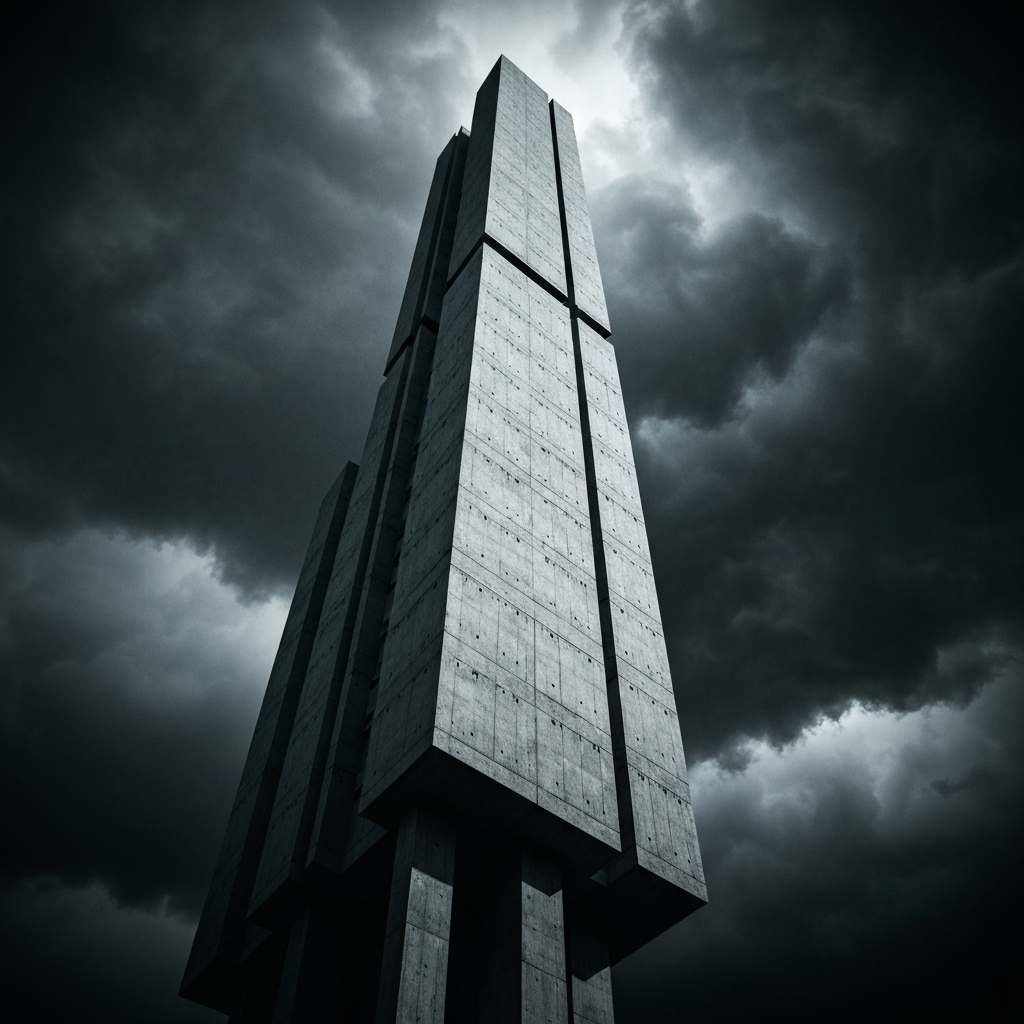
For decades, metal music’s visual language has been a potent, unyielding force, mirroring the sonic assault it represents. Yet, even within a genre famed for its uncompromising stance, evolution is constant. We’re witnessing a profound shift from the archetypal skulls, demons, and ornate swords towards a colder, more oppressive aesthetic: the rise of brutalist metal art. This isn’t merely a stylistic preference; it’s a visceral response to a world teetering on the precipice of technological and societal collapse, offering a new lexicon for bands to communicate their vision. For those ready to forge their identity within this burgeoning trend, exploring the current collection of brutalist and dystopian artwork is an essential first step.
Beyond Skulls & Swords: The New Visual Language of Extreme Metal
The iconography of extreme metal has long been steeped in fantasy, horror, and classic occultism. While these motifs retain their power, a new generation of artists and bands are pushing boundaries, opting for starker, more abstract, and often unsettling visuals. This emerging language eschews overt gore or mythological beasts in favour of existential dread, architectural bleakness, and a pervasive sense of dehumanisation. It’s a visual idiom that resonates with the complexities of modern fear, moving past traditional narratives to explore the grim realities of an industrialised, digitised, and increasingly fragmented existence. The brutalist metal art movement provides a framework for bands to express this contemporary bleakness with potent authenticity.
The Core of Brutalism: Aesthetics of Raw Power and Dehumanization
Brutalism, originally an architectural movement, found its name in the French ‘béton brut’, or ‘raw concrete’. Its principles—monolithic forms, raw materials, functionalism over ornamentation—have been terrifyingly reinterpreted for metal art. The result is an aesthetic of unyielding force, oppressive scale, and an often-deliberate starkness that evokes a sense of control and cold indifference. This is art that speaks of systems, structures, and the overwhelming forces that diminish the individual, perfectly aligning with the darker thematic undercurrents of extreme music.
Architectural Influence: Concrete Jungles and Industrial Decay
Imagine towering, windowless edifices, forgotten power stations, and sprawling urbanscapes choked by concrete and rusted metal. This is the visual bedrock of brutalist aesthetics in metal. These are not just backdrops; they are characters in themselves, symbols of failed utopias and the relentless march of industry. `Dystopian album covers` frequently utilise these elements, transforming landscapes into oppressive monuments to human folly and decay. The raw, unpolished textures and overwhelming scale of `industrial decay artwork` become metaphors for societal breakdown and existential solitude.
Post-Humanity’s Gaze: Cybernetic Horrors and Biomechanical Nightmares
As the brutalist vision extends into the future, it encounters the post-human. Here, the cold, hard lines of concrete give way to the intricate, often unsettling fusion of flesh and machine. `Cybernetic aesthetics metal` explores themes of technological subjugation, synthetic existence, and the blurring lines between organic and artificial. This can manifest as biomechanical monstrosities, fragmented digital identities, or dehumanised figures melded with brutalist structures. It’s a vision that taps into our deepest anxieties about a future where humanity’s essence is irrevocably altered, often producing truly unsettling `post-human metal art`.
Subgenre Deep Dive: Where These Trends Resonate Most
While the brutalist and dystopian aesthetic has a broad appeal, certain subgenres find a particularly potent resonance with its themes.
Death Metal: From Gore to Gloom
No longer solely confined to explicit gore or Cthulhu mythos, modern death metal embraces the psychological and the systematic. Bands are opting for artwork that reflects profound existential dread, societal collapse, and the cold, unfeeling mechanisms of suffering. The oppressive scale of brutalist architecture and the bleakness of `dystopian album covers` provide a sophisticated backdrop for their complex lyrical themes, moving beyond shock value to evoke a deeper, more unsettling despair.
Black Metal: From Wilderness to Wasteland
Traditionally tied to nature’s raw power and ancient folklore, segments of black metal are now turning their gaze from the forest to the blighted city. Urban decay, post-industrial landscapes, and abstract, desolate forms are replacing desolate forests and snowy peaks. This shift signifies a new strain of misanthropy – one rooted not just in nature’s indifference, but in humanity’s self-made ruin, finding expression in stark, `brutalist metal art`.
Industrial/Groove Metal: The Machine Takes Over
For genres like industrial and groove metal, the brutalist and cybernetic aesthetic feels like a natural extension of their very essence. Rhythmic, pounding, and often mechanised, these styles find their perfect visual counterpart in the cold precision of mechanical forms and the overwhelming presence of `industrial decay artwork`. The fusion of human and machine, the relentless rhythm of the factory, and the crushing weight of societal gears are all perfectly encapsulated by these visual trends, making `cybernetic aesthetics metal` a core component of their identity.
Why These Trends Matter: Signalling Authenticity & Modernity
Adopting `extreme metal visual trends` like brutalism and dystopianism is more than just a passing fad; it’s a strategic declaration of a band’s artistic intent and contemporary relevance. Such visuals convey a sophisticated understanding of modern anxieties, aligning a band with forward-thinking artists who aren’t content to merely rehash past glories. This choice signals an authenticity rooted in present-day concerns, positioning a band as relevant and innovative. It suggests a commitment to exploring deeper, more challenging themes beyond superficial shock, attracting an audience that values substance and artistic evolution. To explore how your band can tap into these powerful visual statements, browse our extensive collection of curated dystopian and brutalist art, ready for instant download.
Unleash Your Vision: Sourcing Trending Brutalist Artwork Instantly
In the rapid-fire world of modern music, the ability to quickly and effectively visualise your sound is paramount. For bands looking to embody the brutalist and dystopian aesthetic, the solution lies in accessing a curated library of pre-made, high-quality artwork. This approach empowers you to capture cutting-edge trends without the traditional barriers, allowing for immediate artistic expression.
The Power of Pre-Made: Capturing Cutting-Edge Trends Without the Wait
The iterative process of custom art commissions can be lengthy and unpredictable. By opting for pre-made brutalist and `dystopian album covers`, bands gain immediate access to a wealth of powerful, professionally crafted visuals that are already aligned with current `extreme metal visual trends`. This means less time waiting, more time creating, and the assurance that your visual identity will be as sharp and timely as your latest riff. Instant downloads mean your vision can be realised without delay.
Matching Your Sound: How to Find Your Band’s Dystopian Identity
The key to successful visual branding is congruence between your music and your artwork. As you explore the `brutalist metal art` on offer, consider the specific nuances of your sound: Is it industrial and grinding? Cold and atmospheric? Technically precise and unsettling? Seek out artwork that visually echoes these sonic qualities – be it through stark architectural forms, cybernetic textures, or bleak, dehumanised figures. The vast selection ensures that you can find the perfect visual counterpart to define your band’s unique dystopian identity.
Conclusion: Master the Future of Visual Brutality
The brutalist and dystopian wave is more than a fleeting trend; it’s a powerful, evolving visual language that perfectly encapsulates the contemporary anxieties and sonic landscapes of extreme metal. By embracing these aesthetics, bands can forge an identity that is both deeply resonant and undeniably modern. The tools to achieve this are readily available, offering a direct path to visual mastery.