
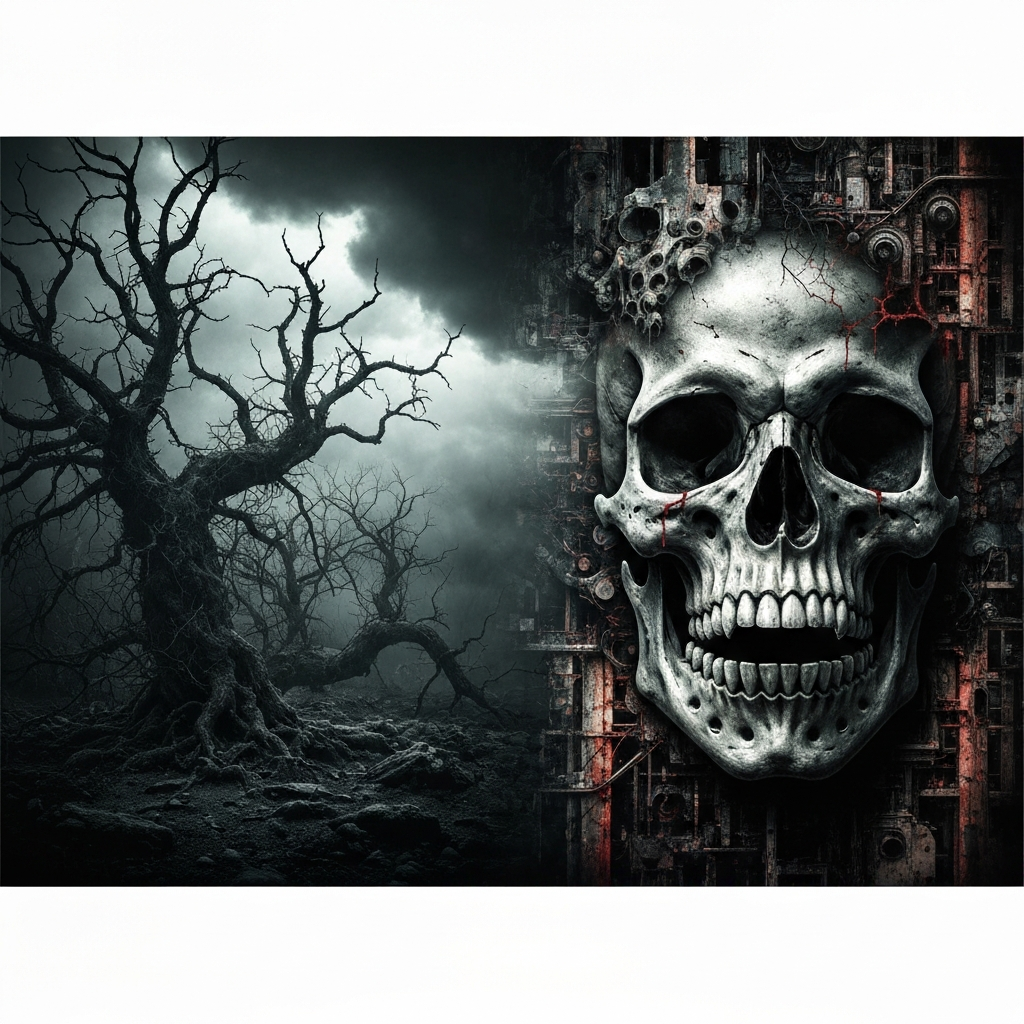
Before the first riff cracks or the initial guttural roar tears through the speakers, a metal band’s album artwork has already made its statement. It’s a primal, psychic scream, broadcasting your sound’s essence directly into the subconscious of your audience. In a scene as diverse and passionate as metal, these visual cues aren’t merely decorative; they are indispensable metal subgenre signals, communicating intent, ideology, and sonic brutality.
Discerning fans don’t just see an image; they read it. They instinctively decode the visual identity metal bands project, using it to anticipate the auditory onslaught to come. This initial visual engagement sets crucial expectations, preparing the listener for the specific sonic landscape your band inhabits. Ignore these unspoken rules at your peril.
Visual Semiotics of Metal: Deconstructing the Subgenre Archetypes
The metal landscape is a tapestry woven from countless threads of sound and vision. Each subgenre, from the most primordial black metal to the most intricate progressive death metal, possesses its own distinct visual language. This isn’t coincidence; it’s a deeply ingrained semiotics, where specific imagery, colour palettes, and thematic elements have evolved into potent shorthand for a particular sonic experience. Understanding these archetypes is fundamental to crafting a coherent band branding metal strategy.
Consider the immediate, visceral reaction conjured by a blurred, monochromatic photo of a desolate forest versus a hyper-realistic depiction of a dragon battling a warrior. Your brain, steeped in metal culture, instantly files these under different categories, preparing itself for vastly different auditory journeys. This phenomenon underpins the power of album artwork subgenres as definitive markers.
The Brutality Spectrum: Death Metal’s Gore & Grime
Sickness & Decay: Morbid Imagery
Death metal’s visual lexicon is uncompromising. It embraces the grotesque, the morbid, and the visceral decay of existence. Expect to encounter skeletal figures, anatomical horrors, scenes of dismemberment, and the chilling aftermath of violence. These aren’t merely shock tactics; they are reflections of the genre’s lyrical preoccupations with death, disease, and the darker facets of humanity. This is a deliberate aesthetic choice, forging an immediate connection with an audience attuned to such explicit themes.
Raw Power: Guttural Visuals
Beyond explicit gore, death metal imagery often conveys a sense of raw, untamed power. Distorted, often abstract forms, oppressive shadows, and a general sense of grime and decay permeate the visual field. The colours are often muted, leaning heavily into browns, greys, and desaturated reds, reinforcing the bleak and relentless nature of the music. The visuals are as guttural as the vocals, providing a perfect complement to the churning riffs and blast beats.
Cosmic Dread: Black Metal’s Despair & Blasphemy
Frostbitten Landscapes: Desolate Atmospheres
Black metal’s visual identity is rooted in the bleak, the cold, and the unyielding. Frostbitten forests, snow-laden mountains, and desolate, windswept landscapes evoke isolation, misanthropy, and an oppressive sense of dread. Often monochrome or heavily desaturated, these visuals transport the viewer to an inhospitable realm, perfectly mirroring the genre’s often raw, atmospheric, and lo-fi sound.
Occult & Anti-Religious Themes: The Blasphemous Canvas
Beyond nature, black metal frequently delves into overt occultism, paganism, and anti-religious iconography. Inverted crosses, pentagrams, ancient runes, and ritualistic imagery are common, serving as direct challenges to established dogma. This thematic content is not subtle; it’s a defiant statement, a visual declaration of war against convention, aligning perfectly with the genre’s confrontational ethos.
Speed & Aggression: Thrash Metal’s Fury & Dystopia
Urban Decay & Warfare: Concrete Jungles of Conflict
Thrash metal artwork often depicts scenarios of urban decay, post-apocalyptic landscapes, and overt warfare. Tanks, fighter jets, ruined cities, and hordes of soldiers are common motifs, reflecting the genre’s preoccupation with social commentary, political corruption, and impending global destruction. The visuals are aggressive, often dynamic, and rarely subtle, matching the relentless pace of the music.
Rebellion & Chaos: The Mosh Pit Incarnate
The imagery frequently captures a sense of chaos and rebellion. Mutants, monstrous figures, and defiant humanoids feature prominently, embodying a primal fury against systemic oppression. The artwork is designed to incite, to provoke, and to perfectly represent the raw, unbridled energy of a mosh pit – a visual analogue to the genre’s rapid-fire riffs and furious drumming.
Power & Fantasy: Heavy/Power Metal’s Heroic Realms
Mythic Beasts & Warriors: Epic Narratives
Heavy and power metal thrive on epic narratives and fantastical realms. Their artwork is replete with mythic beasts – dragons, griffins, hydras – alongside valiant warriors, sorcerers, and heroic figures. These visuals promise grand adventures, valiant battles, and triumphant sagas, aligning with the soaring vocals, melodic guitar solos, and often uplifting choruses characteristic of these genres.
Fortresses & Swords: The Grandeur of Legend
Castles, fortresses, ancient ruins, and gleaming weaponry are recurring elements, establishing a sense of grandeur and historical fantasy. The artwork is typically vibrant, detailed, and often imbued with a sense of wonder and epic scale, inviting the listener into a world of legend and power. It’s a visual portal to realms of high adventure, perfectly mirroring the aspirational and often theatrical nature of the music.
Psychological Hooks: How Specific Imagery Engages Specific Fans
The efficacy of these visual archetypes isn’t accidental; it’s rooted in the psychology of expectation and recognition within the metal community. For a seasoned fan, an album cover isn’t just a picture – it’s an immediate signal, a metal subgenre signal that triggers a cascade of associations.
Triggering Recognition: Why Fans Expect Certain Visuals
Fans develop an innate understanding of metal aesthetics. They have learned to associate specific visual tropes with specific sounds. When they see a band’s artwork, their brains quickly scan for familiar markers. Does it have the stark contrast of black metal? The vibrant fantasy of power metal? The visceral gore of death metal? This instant recognition builds trust and reduces friction, confirming that the band aligns with their existing preferences.
Building Anticipation: Setting the Stage for Your Sound
Beyond mere recognition, appropriate artwork builds anticipation. A cover that perfectly captures the essence of your subgenre acts as a sonic preview, preparing the listener for the auditory experience. It sets the mood, conveys the thematic content, and primes the audience to engage with your music on a deeper level. This first impression metal band leaves can be the difference between a listener diving in or moving on.
The Danger of Mismatched Messaging: When Visuals Betray Your Sound
While the power of resonant visual identity is clear, the pitfalls of misaligned artwork are equally profound. A disconnect between your band’s visual presentation and its sonic reality can be detrimental, undermining your efforts before a single note is heard.
Confusing Your Audience: The Cost of Generic or Misleading Art
Presenting black metal with a vibrant, power metal-esque cover, or death metal with a minimalist, post-rock aesthetic, creates instant confusion. Fans, relying on these crucial visual cues, will be disoriented. This can lead to a sense of betrayal, as their expectations are not met, or worse, they may dismiss your band entirely, assuming it’s not for them. Generic or misleading art is a self-inflicted wound, costing potential listeners and diluting your message.
Diluting Your Identity: Losing Impact in a Visually Saturated Scene
In a scene where thousands of bands vie for attention, a weak or confusing artwork strategy metal employs can result in your identity being lost in the noise. Artwork that doesn’t clearly articulate your subgenre or unique vision simply fades into the background. Your music, no matter how potent, needs a visual counterpart that is equally authoritative and uncompromising to cut through the vastness of the metal landscape.
Mastering the Visual Brutality: Choosing Art That Speaks Your Subgenre’s Truth
The goal isn’t just to have ‘good’ art; it’s to have art that is conceptually robust and aligned with your sound’s specific metal subgenre signals. This means understanding your niche and selecting visuals that resonate deeply with its established aesthetic.
From Concept to Impact: Leveraging Pre-Made High-Impact Artwork
You don’t need a blank canvas to achieve a powerful visual identity. Many bands find immense value in pre-made, high-impact artwork. These pieces are often crafted by artists steeped in metal culture, already embodying the specific tropes and aesthetics that define different subgenres. This approach allows bands to quickly and effectively acquire artwork that is immediately genre-appropriate and visually compelling, without the lengthy process of custom commissioning. To explore a diverse range of genre-defining visuals, browse our collection of album art engineered for maximum metal impact.
Beyond the Cover: Extending Your Visual Language to Merch & Promo
The album cover is the cornerstone, but your visual language extends much further. Merchandise, promotional materials, social media graphics – every visual touchpoint should reinforce your chosen aesthetic. Consistent application of your artwork’s themes and styles builds a cohesive and recognisable visual identity metal fans will instantly connect with, amplifying your band’s presence across all platforms.
Conclusion: Unleash Your Band’s True Visual Power
Your band’s artwork is not an afterthought; it is the vanguard of your sonic assault, a crucial psychic scream that telegraphs your sound before a single note is struck. By understanding and leveraging the inherent album artwork subgenres that define metal, you equip your band with an indispensable tool for communication and connection. Embrace the power of the visual to not only attract but also indoctrinate your audience into the world your music creates. Don’t whisper your identity; scream it.